Is DIY or Professional Bug Control Really the Best in Utah?
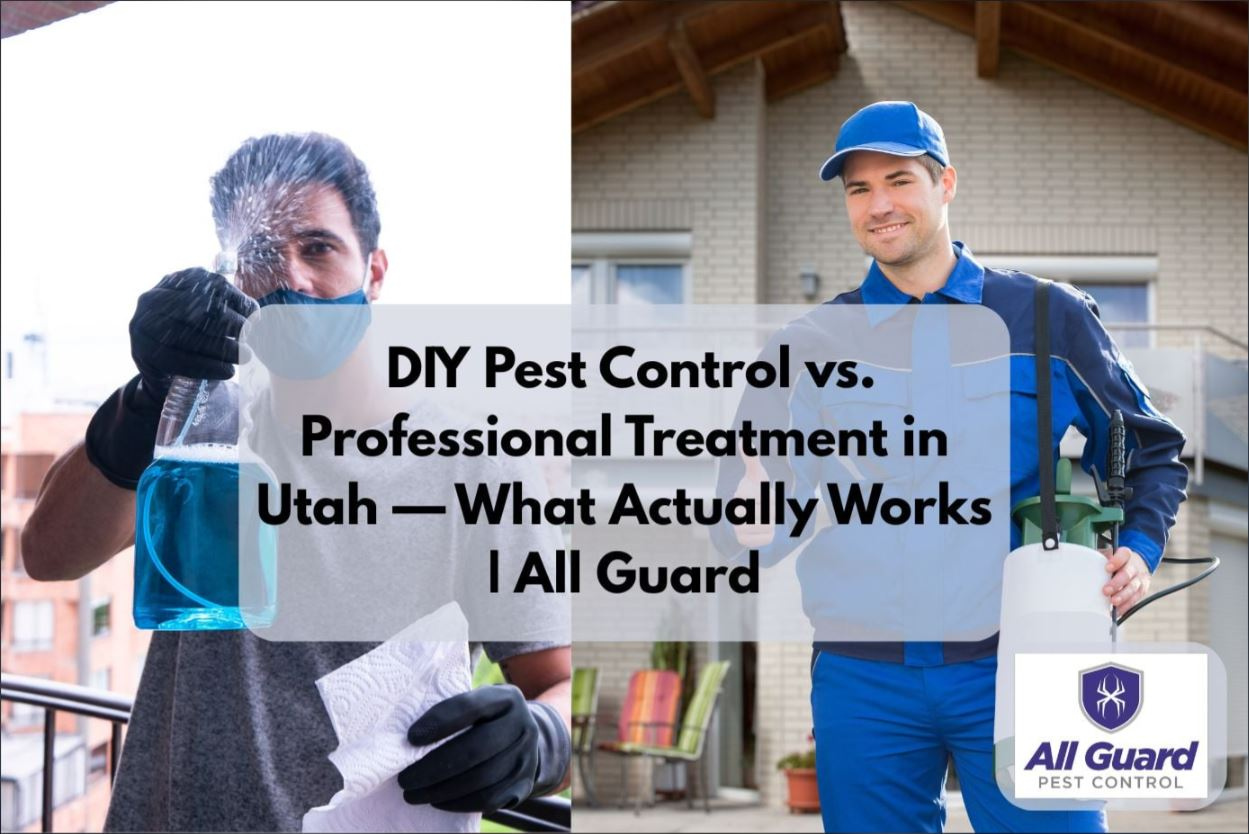
If you’ve ever washed down a spider web, shaken out the garbage before dark, or sprayed a little insecticide around the doors and window frames… and then woke up to a fresh line of ants marching up the basement steps the next morning, you already get the problem.
DIY bug control can work sometimes. But in Utah, it tends to fall apart faster than people expect.
Here’s why: our conditions chew up quick fixes. High UV (especially at elevation) breaks down residues. Summer storms can spike moisture, and then sprinklers keep things damp around foundations, rock beds, and mulch lines. Landscaping trends (rock, drip lines, decorative gravel strips) create perfect travel lanes and hiding zones. Add in soil types and how homes are built, and there are just too many variables for “one spray and done” to hold up.
That’s why so many homeowners end up searching pest control near me, insect control near me, or pest exterminator near me… a second time (or third).
If you want longer-lasting results, the best answer is usually a combo:
Professionally applied treatments to actually control the source and intercept pests before they get established
Basic home adjustments that remove the easy wins pests rely on
Questions or want someone to take a look? Call tel:801-851-1812 or start at the All Guard Pest Control homepage.
When DIY Pest Control Can Work (and when it can’t)
DIY is an option when the issue is early, small, and you can reach the problem safely.
DIY situations that can work in Utah
Indoor ant “scouts” (early stage):
Don’t just spray the trail. Most of the time, that only kills what you can see. If you want DIY to actually help, you need bait matched to what they’re feeding on (sweet vs. protein) and you need the surfaces clean enough that the bait wins the competition. If the trails keep shifting day to day, you’re probably not dealing with a simple “random line” anymore.
Paper wasps on eaves (small, inactive, within reach):
Sometimes a careful knockdown works if it’s truly inactive and safe to reach. But if it’s active, higher up, inside a void, or you’re seeing them coming and going from a crack, that’s where DIY can backfire fast.
Light spider webbing:
This is one of the few times a “non-chemical” DIY tweak can actually help. Swapping bright, cool-white entry bulbs for warmer-spectrum bulbs can reduce night-flying insects near doors… which can reduce web-building activity nearby. If webs keep rebuilding daily in the same spots, you’re probably dealing with a stronger exterior pressure than a bulb swap can fix.
Earwigs piling up in rock beds/patios:
DIY can help a lot here if you correct the conditions that keep things damp:
Water at dawn so edges dry by midday
Redirect downspouts away from the foundation
Pull rock/mulch back 6–12 inches from where siding meets soil or slab edges
That kind of cleanup makes a bigger difference than most sprays people try.
DIY Pitfalls That Make Pest Problems Worse
Here’s where Utah homeowners accidentally make the problem harder (and then wonder why nothing sticks).
1) Spraying visible bugs instead of controlling the colony/source
Ants and roaches are the big ones here. Many sprays kill “what you see,” but don’t stop what you don’t see. With ants, the goal is colony-level control. With roaches, you can easily push them deeper into cracks and hidden spots.
2) Foggers and “broadcast spraying”
Avoid foggers for most household pest issues. They don’t get into the hiding zones that matter, and they can scatter pests into walls, voids, and new rooms. Same goes for random, heavy interior baseboard spraying when the pressure is actually outside.
3) Sealing up an active nest the wrong way
If wasps/yellowjackets are using a void (behind siding, soffit gaps, etc.), “closing the hole” without addressing the nest can drive activity to a new exit point—sometimes inside.
4) Treating the wrong place
A lot of spider activity shows up inside because they’re hunting prey that’s gathering at exterior entry points. If webs are stacking on eaves and frames, but the only thing getting sprayed is the inside baseboards, you’ll often see a short dip… then the rebuild starts again.
Why Professional Pest Control Usually Wins in Utah
Most people don’t call a pro because they “love paying for pest control.” They call because they’re tired of the same problem resetting every couple weeks.
Here’s what a real professional approach does differently:
1) Timing and consistency (because residues don’t last forever here)
Utah sun + irrigation breaks things down quickly. Consistent coverage matters more here than in a lot of places. The goal isn’t “nuke it once.” The goal is to stay ahead of the pressure so pests don’t rebuild.
2) Site trumps quantity
More chemical isn’t the flex people think it is. What matters is where pests actually travel:
eaves and soffits
frame gaps
utility penetrations
weep systems
slab lines and gravel/mulch strips (common in Utah yards)
Stopping scouts before they get inside is how you turn “near me pest control” into actual peace.
3) Pest behavior matters (different pests require different tactics)
This is the part DIY usually can’t match, because it takes experience and repetition.
Ants: often respond best to non-repellent approaches plus bait strategy so the activity gets carried back where it matters
Spiders: exterior-first focus with web/egg cleanup at eaves/frames/weep points; interior targeted only if needed
Wasps / Yellowjackets: direct nest treatment + disposal, then preventive work on common return zones
Cockroaches: targeted gel strategy + growth regulator approach (and follow-up), because sprays alone often make behavior worse
Boxelder bugs (fall): timing is everything; the first cold snap and warm fall days can trigger waves
Termites: if you’re seeing swarmers or signs, it’s not a “spray it and hope” situation—this needs inspection and a real plan
Bed bugs: this is a travel/transfer pest, not a “dirty house” issue. DIY almost always drags the problem out and spreads it room to room.
✅ 4) Small home fixes multiply the results
A good service doesn’t just treat and disappear. You should also get a short punch list that actually helps, like:
rock spacing / pulling material back from siding
sprinkler timing adjustments
bulb changes at entry points
door sweep fixes
screening or sealing suggestions for common entry gaps
Those little changes keep your home from re-inviting the same pests.
And yes—All Guard keeps things straightforward: no door-to-door reps (lower overhead helps pricing), and no long-term contracts. You keep service because it works.
DIY vs. Professional: Real-World Examples (Utah Homes)
Ants in the kitchen/cabinets
DIY: bait can work if it’s placed correctly and the kitchen isn’t competing with crumbs, grease, and spills.
Pro: treat the main foraging lanes and pressure points so activity drops at the source, not just on the countertop.
“Eaves get webs again every day”
DIY: brushing webs down + adjusting entry lighting may help temporarily.
Pro: confirm exterior entry zones, remove webs/eggs, and keep pressure down where spiders are actually building.
Wasps showing up near the door or patio
DIY: risky if you’re guessing where the nest is, or if it’s in a void.
Pro: locate the nest, treat it directly, remove it, and reduce the chance of re-nesting on eaves and corners.
“I saw a cockroach behind the stove”
DIY: sprays can push them deeper into cracks and hidden voids.
Pro: targeted gel strategy and follow-up where they hide (hinges, gaps, dead spaces), so you’re not just chasing them.
Winter pests that show up when it turns cold
This is where people get surprised. Rodents and overwintering insects look for warmth fast. A gap the thickness of a pencil can be enough. DIY sealing can help—if you find the right gaps—but many people miss the main entry points and only seal the obvious ones.
Still want to keep it simple?
Totally fair. If you’re ready to stop playing whack-a-bug, we can handle the outside entry zones, intercept the traffic, and give you a short punch list of the biggest “easy fix” items that keep pests coming back.
Call tel:801-851-1812 to get pricing or book service. You can also start at the All Guard Pest Control homepage and work from there.
Want proof you’re dealing with a team that actually shows up and does the work? Check our customer testimonials.
Service Areas We Commonly Help
If you’re in Utah County or nearby and you’re searching “pest control near me,” you’re in the right place. Here are a couple starting points:
(And if you’re outside those, call tel:801-851-1812—we’ll tell you straight if you’re in range.)