Ant, Spider, and Insect Control in Utah — Complete Homeowner Guide
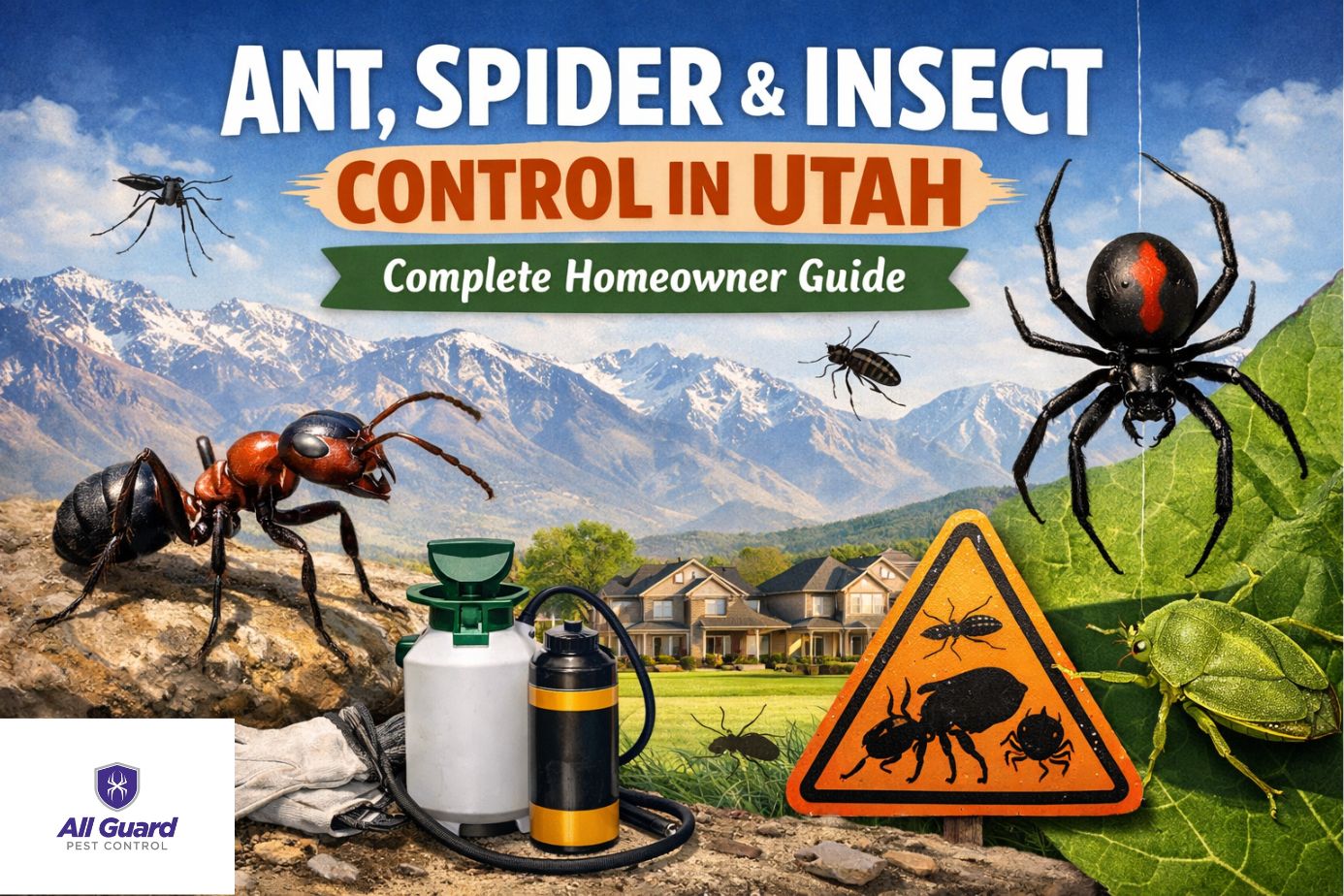
If you’re searching for insect control near me, you’re far from alone. Utah homeowners deal with ant invasions, spider activity, cockroach surprises, wasp nests, earwigs, and outdoor pests that show up quickly when the weather changes. Whether you live in Orem, Provo, Lehi, Sandy, Mapleton, or another city along the Wasatch Front, insects adapt fast to Utah’s seasonal shifts and can enter through openings most homeowners never notice.
This complete guide from All Guard Pest Control breaks down what Utah homeowners need to know about preventing, removing, and managing insects around the home. Instead of treating pest control like a one-time spray, the goal is to understand what attracts pests, where they enter, how they behave by season, and when professionally applied service makes the most sense.
All Guard provides contract-free pest control service for Utah homeowners, HOAs, and businesses. There are no door-to-door reps, which helps keep pricing competitive and communication straightforward. If you need help now, call (801) 851-1812.
Understanding Utah’s Most Common Household Insects
Utah homes attract insects for predictable reasons. Moisture changes, hot summers, cold winters, drought cycles, irrigation habits, exterior lighting, and landscaping choices all play a role. Before choosing the best pest exterminator near me, it helps to understand what you are actually fighting.
Utah’s climate includes hot, dry summers, cold winters, sudden spring moisture, and fall temperature drops. Those changes cause ants to surge in spring, spiders to become more visible in late summer and fall, cockroaches to seek warmth and moisture indoors, and wasps or yellowjackets to become more aggressive by late summer.
Most household insect problems in Utah involve ants, spiders, cockroaches, wasps, hornets, yellowjackets, earwigs, boxelder bugs, and other occasional invaders. The exact issue depends on your home’s structure, landscaping, watering habits, and location.
Ant Control in Utah: Prevention, Removal, and Treatment
Ants are one of the biggest reasons homeowners search for pest control near me or near me pest control in Utah. They enter kitchens, pantries, bathrooms, basements, garages, and laundry rooms. Once a trail forms, it can grow fast because ants leave pheromone paths that other workers follow.
For a deeper supporting article on this topic, read Ant Control in Utah: How to Eliminate and Prevent Infestations.
The most common indoor ant issues usually start around foundation cracks, slab seams, gaps under doors, weep holes, unsealed utility penetrations, pet food areas, and moisture sources. A small leak under a sink or overwatered foundation bed can be enough to pull an entire colony toward the home.
Pavement ants are commonly seen around driveways, sidewalks, and foundation seams. Odorous house ants often show up in kitchens and bathrooms. Carpenter ants are more serious because they can be associated with moisture-damaged wood. Whatever the species, the wrong DIY spray can make things worse. Repellent products may scatter the colony, split the trail, or push ants deeper into wall voids.
A better long-term plan uses matched baits, non-repellent placements, moisture control, and exterior treatment around the areas ants actually travel. Homeowners can help by storing food in airtight containers, cleaning pantry spills, fixing leaks, keeping pet food sealed, trimming shrubs away from siding, and sealing obvious gaps.
Spider Control in Utah Homes
Spider activity in Utah often increases in late summer and fall. Many homeowners search for bug service near me, exterminator near me, or insect removal near me when they start seeing spiders in garages, basements, window wells, eaves, and storage areas.
For the full supporting article, read Spider Infestations in Utah: What Attracts Them and How to Stop Them.
Spiders are usually a sign that other insects are present. Lights attract moths and other flying insects. Landscaping creates shelter for prey. Garages and basements provide quiet corners where spiders can hide. If the food source remains, spider webs often come back even after you knock them down.
Black widows are the spider Utah homeowners tend to worry about most. They are commonly found in quiet, protected areas such as valve boxes, garage corners, under patio furniture, and around exterior storage. Hobo spiders and wolf spiders may also appear indoors, especially when temperatures shift.
The best spider prevention plan starts outside. Reduce clutter, sweep webs, remove egg sacs, switch bright exterior bulbs to warmer-spectrum bulbs, keep vegetation trimmed back, and use professionally applied exterior placements around eaves, door frames, window frames, weep holes, and utility lines. Interior treatment is usually spot-focused only when spiders are already active inside.
Cockroach Prevention and Professional Removal
Cockroaches thrive wherever warmth, moisture, and food overlap. In Utah, they are especially concerning in multi-unit housing, commercial kitchens, older buildings, rental properties, and homes with hidden moisture around plumbing or appliances.
For the supporting article, read Cockroach Control: Signs, Causes, and Effective Solutions.
Roaches often hide under appliances, behind refrigerators, inside wall voids, around plumbing fixtures, near drains, behind cabinets, and inside warm equipment spaces. Warning signs include small black droppings, egg casings, nighttime activity, and an oily or musty odor.
DIY roach sprays usually fail because they do not reach the harborage areas. Foggers and repellent sprays can push roaches deeper into walls or contaminate bait placements. A better approach usually includes gel baiting, insect growth regulators, crack-and-crevice treatment, sanitation cleanup, and follow-up monitoring.
Homeowners can help by eliminating food residue, sealing pet food, cleaning behind appliances, fixing leaks, reducing cardboard storage, and keeping trash sealed. But if roaches are already established, professional treatment is strongly recommended.
Stinging Insects: Wasps, Hornets, and Yellowjackets
Wasps, hornets, and yellowjackets are common around Utah homes by midsummer. They build nests under eaves, in soffits, behind siding, around decks, in garages, inside attic vents, under playsets, and sometimes in the ground or retaining walls.
For the full supporting article, read Stinging Insects in Utah: Wasps, Hornets, and Yellowjackets.
Early warning signs include several wasps hovering near a door, visible papery nest material, buzzing behind vents, repeated traffic into a small opening, or aggressive activity near trash cans and grills. Nests often begin small in spring but can become much larger and more defensive by late summer.
DIY wasp removal can be risky, especially when nests are active, high, hidden in wall voids, or located in the ground. Sealing an active void nest can push insects indoors. A professional treatment should target the nest directly, remove it when appropriate, and reduce future nest starts around eaves and other protected areas.
Homeowners can reduce stinging insect pressure by sealing trash cans, cleaning grill grease trays, removing fallen fruit, keeping outdoor eating areas clean, and checking eaves early in the season for starter nests.
What’s Attracting Insects to Your Home?
Most insect problems are not random. They usually trace back to moisture, food, shelter, lighting, landscaping, or easy entry points. If your home keeps getting pest activity, the source may be something around the property that makes insects want to stay.
For a dedicated supporting article, read What’s Attracting Insects to Your Home and How to Fix It.
Moisture is one of the biggest attractants. Leaky faucets, crawlspace humidity, condensation, overwatered lawns, clogged gutters, and downspout pooling can all draw ants, earwigs, roaches, and other insects toward the structure.
Landscaping also matters. Mulch pressed against the foundation, rock beds touching siding, overgrown shrubs, standing water, leaf debris, and stacked items near the home all create shelter for insects.
Food sources make the problem worse. Pet food, bird seed, pantry spills, organic trash, grill grease, and uncovered garbage can attract ants, roaches, wasps, and other pests. Bright exterior lights can attract flying insects, which then attract spiders.
Small changes often make a major difference. Water early in the morning so the foundation dries by midday. Keep mulch and rock away from siding. Trim shrubs back. Store pet food and bird seed in sealed containers. Use warm-spectrum bulbs near entryways. Keep trash sealed and away from doors.
Outdoor Pest Control: Yards, Patios, and Decks
Outdoor pest control is one of the most important parts of keeping insects out of the home. Most indoor pest issues begin outside, then move in through doors, cracks, windows, vents, and utility gaps.
For more detail, read Outdoor Pest Control Tips for Yards, Decks, and Patios.
A good outdoor plan includes trimmed grass, reduced standing water, clean gutters, clear foundation edges, fewer hiding spots under decks, inspected patio furniture, and professionally applied exterior treatments around high-pressure areas.
Decks, patios, sheds, playsets, retaining walls, and outdoor storage areas can all create shelter for insects. Wasps may build under deck rails. Spiders may hide beneath furniture or in storage boxes. Earwigs often gather in damp corners. Ants follow slab seams and patio cracks.
The goal is not to spray every inch of the yard. The goal is to identify where pests are traveling and apply treatment where it matters: foundation edges, eaves, door frames, window frames, weep systems, utility penetrations, and other pest pathways.
Hidden Entry Points Utah Homeowners Miss
Even a clean, well-maintained home can develop pest problems if small entry points go unnoticed. Ants, spiders, wasps, cockroaches, and occasional invaders can enter through openings that most homeowners do not think about.
The full supporting article is Pest Entry Points Most Homeowners Overlook.
Common entry points include foundation cracks, slab seams, gaps around doors, worn weatherstripping, damaged garage seals, window frame gaps, attic vents, roofline gaps, soffits, utility penetrations, weep holes, and siding gaps.
Weather changes can make these openings worse. Materials expand and contract. Door sweeps wear down. Caulking cracks. Utility gaps loosen. Landscaping that grows too close to the home creates bridges pests can use.
Homeowners should inspect entry points at least seasonally. Look for daylight under doors, gaps around pipes or wires, cracks near the foundation, loose vents, torn screens, and branches touching the home. Fixing these problems helps every professional treatment last longer.
Best Pest Control Schedule for Utah Homes
Pest activity changes by season in Utah, so treatment schedules should match the pressure. A home with light pest activity may do well with quarterly service, while a property with recurring infestations may need more frequent visits for a period of time.
For the full supporting article, read Best Pest Control Schedule for Utah Homes.
Spring is typically when ants and wasps begin to increase. Summer brings heavy spider, earwig, roach, and wasp pressure. Fall pushes spiders, boxelder bugs, and rodents toward the home. Winter can still produce indoor sightings when pests find warmth and shelter.
Most Utah homes benefit from quarterly pest control. Heavier issues, such as roaches, recurring ants, high spider activity, or commercial pressure, may need monthly or every-other-month service until activity is under control. The goal is not to overdo treatment. The goal is to maintain protection before seasonal pressure overwhelms the home.
Local Expertise Matters: Why Utah-Specific Pest Control Works Best
Homes in Orem, Provo, and Lehi deal with different conditions. Orem properties often see rock-border pressure, recurring ants, and spider activity around garages and eaves. Provo homes may experience pest movement related to canyon airflow, older construction, and mixed landscaping. Lehi homes often deal with new construction gaps, disturbed soil, and rapid neighborhood development.
Local service matters because pest behavior changes by climate, soil, construction type, landscaping, and season. A generic approach may miss the reason pests are appearing at a specific property.
If you are searching insect control near me, pest control near me, bug service near me, pest killer near me, or exterminators pest control near me, choosing a company familiar with Utah conditions can improve results and reduce repeat problems.
DIY vs. Professional Pest Control
DIY can help with small ant trails, occasional spiders, minor yard pests, and simple prevention habits. Homeowners should keep kitchens clean, seal food, fix moisture issues, sweep webs, adjust lighting, and reduce clutter near the foundation.
Professional help makes more sense for carpenter ants, black widows, cockroaches, recurring infestations, active wasp nests, hidden nests, heavy exterior pressure, or any issue that returns after a few DIY attempts.
All Guard Pest Control uses professionally applied products and explains where treatments are placed and why. The company also avoids long-term contracts and does not rely on door-to-door sales reps. Service options are available for residential homes, HOAs, and commercial properties.
Frequently Asked Questions
What is the most common insect problem in Utah?
Ants and spiders are among the most common insect problems in Utah homes. Earwigs, wasps, roaches, and boxelder bugs are also common depending on the season and property conditions.
How often should Utah homeowners schedule pest control?
Most Utah homes benefit from quarterly pest control. Homes with heavier pressure, recurring infestations, or commercial needs may require more frequent visits until activity is under control.
Are Utah spiders dangerous?
Most spiders in Utah are nuisance pests, but black widows are venomous and should be handled carefully. If you see repeated spider activity in garages, window wells, storage areas, or around exterior furniture, professional spider control may be needed.
What attracts ants to a home in Utah?
Moisture, food, pet food, foundation cracks, irrigation, weep holes, and small entry points are common ant attractants.
Can I remove a wasp nest myself?
Small, inactive starter nests may be manageable, but active, high, ground, or hidden nests should be treated professionally. Wasp and yellowjacket activity can become aggressive quickly.
Are treatments safe for kids and pets?
All Guard avoids using the word “safe” as a blanket promise. Treatments are professionally applied, selected for the environment, and placed according to label directions. Your technician can explain any short re-entry intervals or precautions after service.
Conclusion and Next Steps
Staying ahead of Utah insects requires prevention, seasonal awareness, treatment timing, and local experience. Whether you are dealing with ants, spiders, wasps, roaches, earwigs, or other outdoor pests, All Guard Pest Control provides contract-free service tailored to Utah homes.
For homeowners searching pest control near me, insect control near me, pest exterminator near me, pest management near me, or insect removal near me, All Guard is a local option serving Utah County, Salt Lake County, Summit County, and nearby areas.
Call (801) 851-1812 or visit All Guard Pest Control to get started.